
Severe D., Severe L. Juillet 2010
Introduction
After the January 12, 2010, earthquake, the Haitian health system, is now facing conditions resulting from the aftermath of the catastrophe. Among those conditions, a rising number of premature births will bring new challenges. The State University Hospital’s Pediatric ward, main reference facility for Haiti, is badly damaged (Fig 1) and today the neonatal section is hosted under a tent installed on the hospital yard (Fig 2).


Background

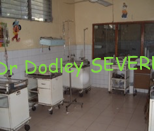
The State University Hospital’s Pediatric ward was a 90 beds capacity structure with a neonatal section. This section had a premature newborn care unit (with a capacity of 5 incubators, Fig 3), a newborn admission area (with 4 warmers and 6 cribs) and a newborn hospitalization area (with a capacity of 20 beds, Fig 4). Due to the limited capacity of the premature newborn care unit, most premature newborns were managed in the hospitalization area. Today those 5 incubators and 7 cribs are gathered under a tent and represent the new neonatal section.
Objectives

The goal is to demonstrate the importance of prematurity in the Pediatric ward of the State University hospital and the need to introduce a method yielding to a better management of this fragile category, particularly with the new living and working conditions after the January 12 tragedy.
Method
We reviewed data from the Pediatric ward records. Different period of time had been compared and prematurity’s stand within the neonatal causes of hospitalization and death had been determined.
Results
From January to December 2008, 220 premature newborns were cared for in that section, compare to 154 in 2007 and 120 in 2006 (Table I).
Table I

Prematurity rate represented 12.90% of the newborn hospitalization in 2006, 14.48% in 2007 and 21.18% in 2008 (Table II).
Table II

Premature newborn death represents 49.09% of total neonatal death for 2008 (Table III).
Table III

Hypothermia and infections were among the most common causes of admission.
Discussion
On January 12, 2010, the destructive earthquake that hits Port-au-Prince led to more than 200,000 deaths and 1 million people relocated. Most of Haiti’s capital infrastructures and buildings were devastated thus creating new living conditions for the population. Those displaced are now living under tents within an unfit environment. With a birth rate of 32 ‰ inhabitants, and Port-au-Prince having a population of 3 million inhabitants, we can envision 96000 pregnancies for this year. Those women living in harsh conditions, without proper prenatal care and having economic limitations are more prone to premature labor. Kangaroo mother care could be the tool needed to guarantee the survival of Haiti’s premature newborn babies.
Conclusion
The benefit of kangaroo mother care has been proven by different studies. The urgent need to cope with the ratio between the increased number of premature births and the hospitalization capacity, render the implementation of this method a must.